No.115 Yunhe North Road, Yangzhou City.Shuzhou, China +86-13032562550 jsts2021@yeah.net
Follow Us -
News

How Can a Metal Bellows Expansion Joint Improve Pipeline Safety, Flexibility, and Service Life

2026-10-21 0 Leave me a message

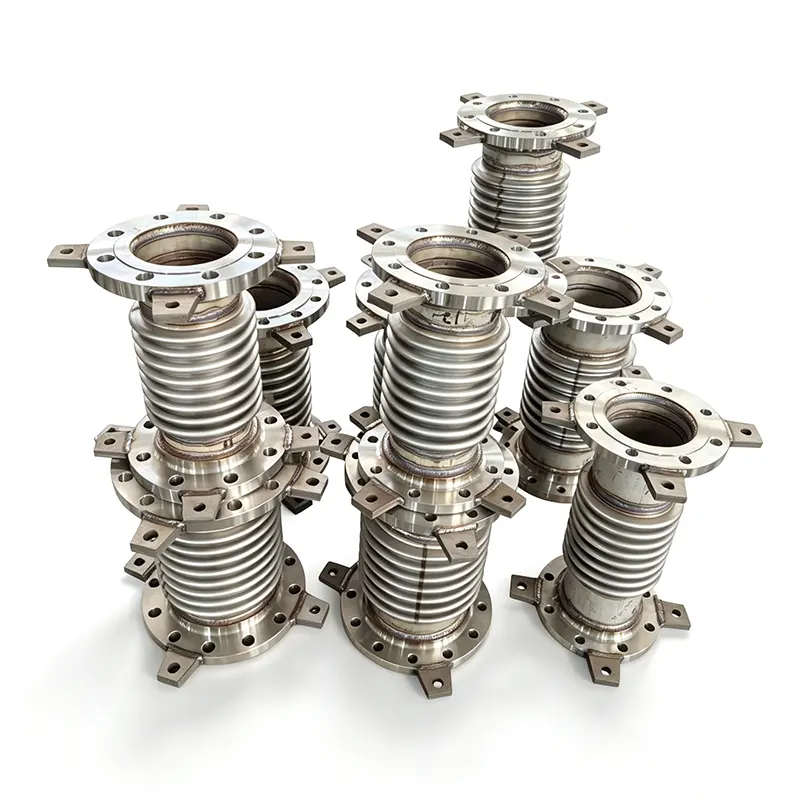
Tianshun, a manufacturer of industrial pipeline components, supplies Metal Bellows Expansion Joint solutions designed to accommodate thermal expansion, absorb pipeline movement, and support reliable operation under demanding industrial conditions. By selecting the appropriate bellows material, movement configuration, and pressure rating, engineers can reduce excessive piping stress, protect connected equipment, and improve the long-term performance of industrial piping systems.

A metal bellows expansion joint is a flexible piping component that compensates for dimensional changes caused by temperature fluctuations, mechanical displacement, and selected operating loads. Its corrugated metallic bellows can accommodate axial, lateral, or angular movement, depending on the design. Common applications include power generation, petrochemical processing, district heating, water treatment, and industrial manufacturing. Choosing the right joint requires careful evaluation of operating pressure, temperature, fluid compatibility, movement requirements, fatigue life, and installation conditions. This guide explains how metal bellows expansion joints work, compares common configurations, outlines material selection considerations, and highlights the quality checks that industrial buyers should discuss with a qualified supplier such as Tianshun.

Metal Bellows Expansion Joint

Table of Contents

  1. What Is a Metal Bellows Expansion Joint?
  2. How Does a Metal Bellows Expansion Joint Work?
  3. What Are the Main Benefits?
  4. What Types of Metal Bellows Expansion Joints Are Available?
  5. How Do Materials and Specifications Affect Performance?
  6. Where Are Metal Bellows Expansion Joints Used?
  7. How Do You Select the Right Expansion Joint?
  8. What Installation and Maintenance Practices Matter?
  9. Frequently Asked Questions
  10. Conclusion

1. What Is a Metal Bellows Expansion Joint?

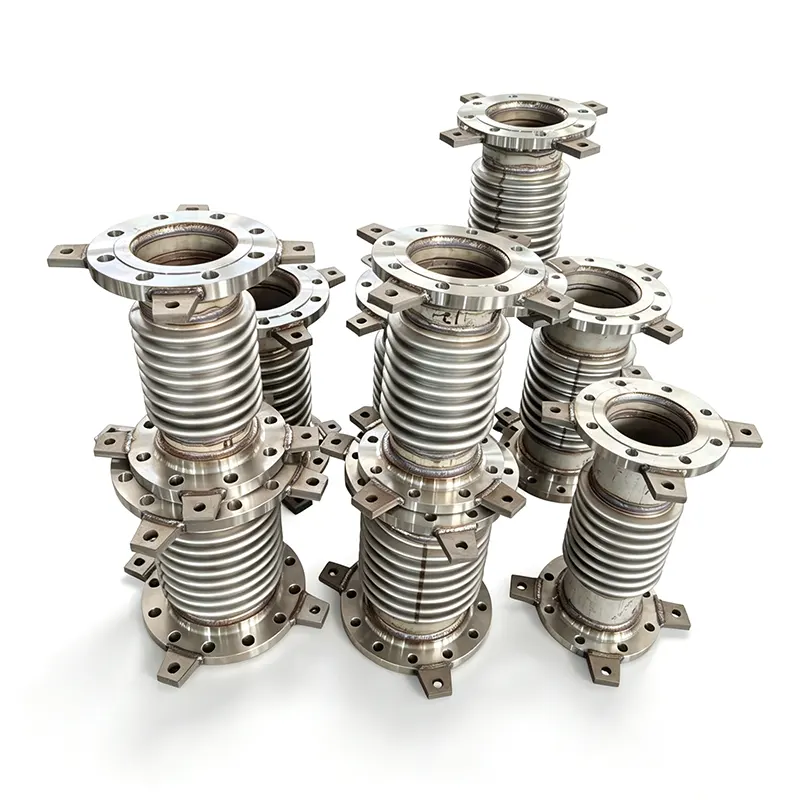
A metal bellows expansion joint is a flexible connector installed in a piping system to accommodate movement while maintaining the required pressure boundary. Its primary component is a thin-walled metallic bellows formed with a series of corrugations. These corrugations allow controlled deformation without requiring the entire pipe to move freely.

Unlike a rigid pipe connection, which transfers thermal displacement into surrounding components, a properly engineered expansion joint provides a designated location for movement. This helps manage loads transmitted to pipe anchors, supports, pumps, valves, and heat exchangers.

A typical assembly may include:

  • Metal bellows: The flexible element that absorbs specified movements.
  • End connections: Flanges or welded ends that connect the joint to the piping system.
  • Internal liner: An optional component that helps guide flow and protect the bellows from erosion or flow-induced vibration.
  • External cover: A protective component that helps shield the bellows from external damage.
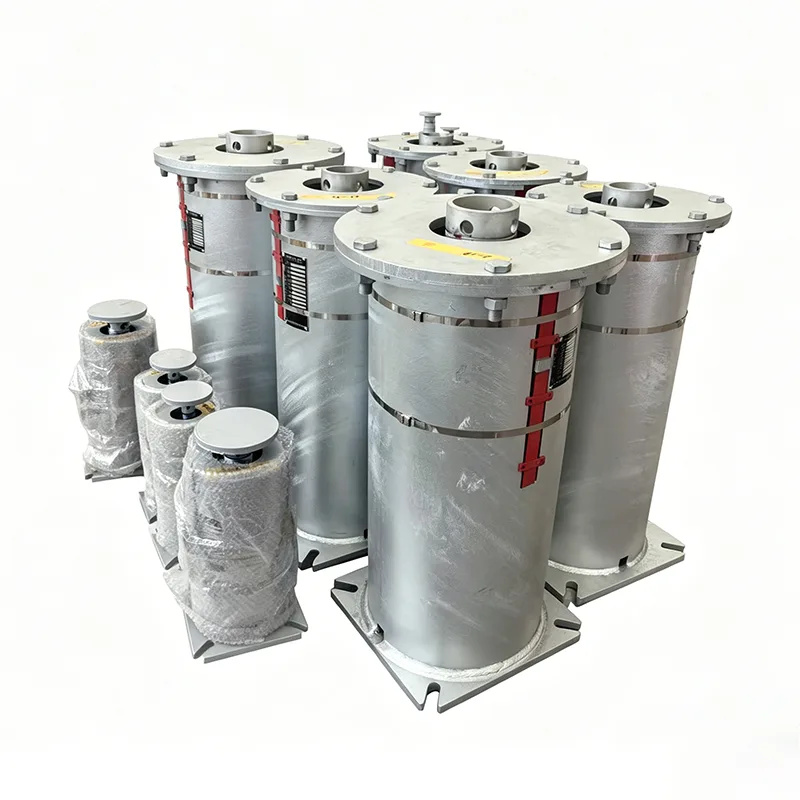
  • Tie rods, hinges, or gimbal hardware: Components used in specific designs to control movement or manage pressure thrust.

The appropriate construction depends on the piping layout, operating environment, and engineering calculations. For product information, visit the Tianshun Metal Bellows Expansion Joint product page.


2. How Does a Metal Bellows Expansion Joint Work?

Industrial pipelines expand when their temperature rises and contract when they cool. Equipment vibration, installation tolerances, and structural displacement can introduce additional movement. If these changes are not properly accommodated, they may increase stress on pipework and connected equipment.

The corrugated bellows deforms elastically within its designed movement limits, absorbing a specified portion of the displacement. Depending on the joint configuration, movement may occur in one direction or through a combination of directions.

  • Axial movement: Compression or extension along the pipe centerline.
  • Lateral movement: Displacement perpendicular to the pipe centerline.
  • Angular movement: Rotation between connected pipe sections.

Pressure thrust is another important consideration. Internal pressure acting on the effective area of a bellows can generate a force that must be restrained or balanced by the system design. Anchors, guides, tie rods, and pressure-balanced configurations may be required, depending on the application.

Consequently, a metal bellows expansion joint should be selected as part of an overall piping flexibility and stress analysis rather than treated as an isolated accessory.


3. What Are the Main Benefits?

Thermal Movement Compensation

Metal bellows expansion joints accommodate calculated thermal displacement in hot and cold piping systems. This can help reduce excessive loads caused by restrained expansion and contraction, provided the joint is correctly sized and installed.

Protection for Connected Equipment

Uncontrolled piping loads may affect pump nozzles, valve connections, turbine interfaces, and heat exchanger connections. A properly engineered expansion joint can help manage these loads by allowing the specified movement within the piping arrangement.

Adaptability to Demanding Conditions

Stainless steel and selected high-alloy bellows materials can be specified for different combinations of pressure, temperature, and process media. The appropriate material grade must be confirmed against actual chemical exposure and operating conditions.

Flexible System Design

Axial, universal, hinged, gimbal, and pressure-balanced designs provide different ways to accommodate movement. This allows engineers to match the joint configuration to the piping layout rather than relying on one design for every application.

These benefits depend on correct engineering, material compatibility, suitable supports, and adherence to the manufacturer's installation requirements. An expansion joint cannot compensate for inadequate pipe support or an incorrectly designed anchor system.


4. What Types of Metal Bellows Expansion Joints Are Available?

Different expansion joint configurations serve different movement and pressure-thrust requirements. Understanding these differences helps buyers specify an appropriate product.

Joint Type Primary Movement Capability Typical Design Consideration
Axial expansion joint Axial compression and extension Requires suitable anchors and guides to control the piping system.
Universal expansion joint Primarily lateral movement, with angular capability depending on design Two bellows connected by a center spool provide greater movement flexibility.
Hinged expansion joint Angular movement in a defined plane Hinge hardware controls movement and helps restrain pressure thrust.
Gimbal expansion joint Angular movement in multiple planes Gimbal hardware controls rotation while managing pressure thrust.
Pressure-balanced expansion joint Movement according to its specific configuration Designed to balance pressure thrust where conventional restraint is unsuitable.
Externally pressurized expansion joint Axial movement, depending on design May be suitable for applications requiring substantial axial compression capacity.

The movement capacity of each configuration depends on its geometry, bellows construction, pressure, temperature, and fatigue requirements. Engineers should confirm the allowable combined movements rather than adding individual movement ratings without verification.


5. How Do Materials and Specifications Affect Performance?

Material selection affects corrosion resistance, temperature capability, flexibility, and fatigue performance. The correct specification must account for the process medium as well as the mechanical conditions experienced during operation.

  • SS304 stainless steel: A common option for general industrial environments where its corrosion resistance and temperature capability are suitable.
  • SS316L stainless steel: Often considered for applications requiring improved resistance to certain corrosive environments.
  • SS321 stainless steel: A stabilized stainless steel grade that may be appropriate for selected elevated-temperature applications.
  • Inconel 625: A nickel-based alloy considered for demanding temperature and corrosion conditions.
  • Hastelloy alloys: Selected grades may be suitable for particular aggressive chemical environments, subject to compatibility assessment.

Tianshun's published product information lists the following typical options. These are reference ranges and should not be interpreted as simultaneous ratings for every design.

Parameter Published Typical Range or Option What Buyers Should Confirm
Nominal diameter DN50–DN3000; larger or non-standard sizes may be considered Actual connection size, face-to-face length, and drawing requirements
Design pressure PN10, PN16, PN25, PN40 Pressure rating at the specified operating temperature
Design temperature -196°C to +800°C Permitted temperature for the selected material and construction
Bellows material SS304, SS316L, Inconel 625, and other options Corrosion compatibility and material certification
Connections Flanged or welded ends Applicable flange standard, dimensions, and welding requirements
Fatigue life 1,000, 3,000, or 5,000 cycles for specified designs Calculated cycle life under the actual movement and pressure conditions

Actual allowable pressure, temperature, and movement must be verified for the selected joint. These parameters are interdependent, and the most demanding value in one category does not automatically apply when other operating conditions change.


6. Where Are Metal Bellows Expansion Joints Used?

Metal bellows expansion joints are used across industries where controlled piping movement and reliable containment are important.

  • Power generation: Steam lines, boiler systems, turbine connections, and district heating networks.
  • Oil and gas: Refinery piping, hydrocarbon transfer lines, and selected high-temperature process systems.
  • Petrochemical processing: Chemical process lines requiring carefully selected corrosion-resistant materials.
  • Water treatment: Pumping stations and water transfer pipelines where movement or vibration requires management.
  • HVAC and building services: Heating, cooling, and chilled-water systems with temperature-related pipe movement.
  • Steel and metallurgical plants: Selected high-temperature process lines and industrial exhaust-related piping systems.

For each application, engineers should evaluate fluid composition, design pressure, operating temperature, startup and shutdown cycles, vibration, and potential transient loads. These details determine whether a metal bellows joint is suitable and which configuration should be specified.


7. How Do You Select the Right Expansion Joint?

A reliable selection process starts with accurate operating data. Choosing a joint based only on nominal pipe diameter can result in inadequate movement capacity or an unsuitable pressure rating.

  1. Define operating conditions: Record normal and maximum pressure, operating and design temperatures, process media, and possible transient conditions.
  2. Calculate piping movement: Determine expected axial, lateral, and angular displacement, including relevant combined movements.
  3. Assess pressure thrust: Review anchor loads, guide spacing, support arrangements, and whether a restrained or pressure-balanced design is appropriate.
  4. Select the material: Match bellows alloys and connection materials to the fluid chemistry, temperature, and external environment.
  5. Establish fatigue requirements: Estimate the number and severity of operating cycles and request calculations based on the intended service conditions.
  6. Confirm standards and documentation: Specify the applicable design standards, inspection requirements, material certificates, and testing records.
  7. Review installation constraints: Check available space, connection dimensions, accessibility, and maintenance requirements.

Tianshun provides standard and customized metal bellows expansion joint options. For non-standard systems, sharing the piping drawings and operating data helps the engineering team assess the required configuration and specifications.


8. What Installation and Maintenance Practices Matter?

Even a correctly designed expansion joint can fail prematurely if it is installed incorrectly or subjected to movement outside its specified limits. Installation and maintenance should therefore follow the approved drawings and manufacturer instructions.

Installation Checklist

  • Inspect the bellows for dents, deformation, corrosion, and transportation damage.
  • Verify flow direction, orientation, connection dimensions, and installation length where applicable.
  • Confirm that pipe anchors, guides, and supports match the approved piping design.
  • Remove shipping restraints only at the stage specified by the manufacturer.
  • Avoid twisting, unintended preloading, or forcing misaligned pipe ends into position.
  • Protect the bellows from welding spatter, impact, and other installation hazards.
  • Complete the specified pressure or leak testing procedure using an approved method.

Ongoing Inspection

During service, check for visible deformation, corrosion, leakage, unusual vibration, and damage to protective components. Review any changes in operating conditions that could affect fatigue life or movement capacity. Inspection intervals should be based on service severity, equipment criticality, and the applicable maintenance program.

For high-pressure, high-temperature, or hazardous-media systems, inspection and repair should be handled by qualified personnel under the relevant safety procedures. A damaged bellows should not be returned to service without an appropriate engineering assessment.


9. Frequently Asked Questions

Q1: What is the main purpose of a metal bellows expansion joint?

Its main purpose is to accommodate specified piping movement caused by thermal expansion, contraction, or other displacement while helping manage the loads transmitted through the piping system.

Q2: What is the difference between axial and universal expansion joints?

An axial expansion joint primarily accommodates compression and extension along the pipe centerline. A universal expansion joint uses two bellows elements separated by a center spool to accommodate greater lateral movement, with additional angular capability depending on its design.

Q3: Which material is best for a metal bellows expansion joint?

There is no single best material for every application. SS304, SS316L, SS321, Inconel 625, and other alloys may be appropriate under different conditions. Selection should be based on fluid compatibility, temperature, pressure, fatigue requirements, and the manufacturer's engineering assessment.

Q4: How long can a metal bellows expansion joint last?

Service life depends on the number and magnitude of movement cycles, pressure, temperature, corrosion, vibration, installation quality, and maintenance. Request a fatigue-life calculation for the specified operating envelope rather than relying on a universal service-life estimate.

Q5: Does a metal bellows expansion joint eliminate the need for pipe supports?

No. Expansion joints do not generally replace the need for suitable pipe supports, anchors, and guides. These components control pipe weight, alignment, and movement so that the joint operates within its design limits.

Q6: Can Tianshun manufacture customized metal bellows expansion joints?

Tianshun's product information describes standard and customized designs, including non-standard dimensions and different material options. Buyers should provide drawings, operating conditions, movement requirements, and connection details to confirm feasibility and obtain a design-specific quotation.


10. Conclusion

A Metal Bellows Expansion Joint is an important component in industrial piping systems that must accommodate thermal movement, manage displacement, and protect connected equipment from excessive mechanical loads. Reliable performance depends on choosing the right bellows material, movement configuration, pressure rating, and fatigue life while ensuring correct installation and support design. Tianshun offers standard and customized solutions for a range of industrial pipeline requirements, with material traceability and inspection options described in its product information. To identify a suitable configuration for your project, review the Tianshun Metal Bellows Expansion Joint specifications and contact us with your operating parameters, technical drawings, and purchasing requirements to discuss material selection, customized design, and a solution tailored to your pipeline system.

Related News
Leave me a message
X
We use cookies to offer you a better browsing experience, analyze site traffic and personalize content. By using this site, you agree to our use of cookies. Privacy Policy
RejectAccept