No.115 Yunhe North Road, Yangzhou City.Shuzhou, China +86-13032562550 jsts2021@yeah.net
Follow Us -
Products
Buckling Restrained Brace

Buckling Restrained Brace

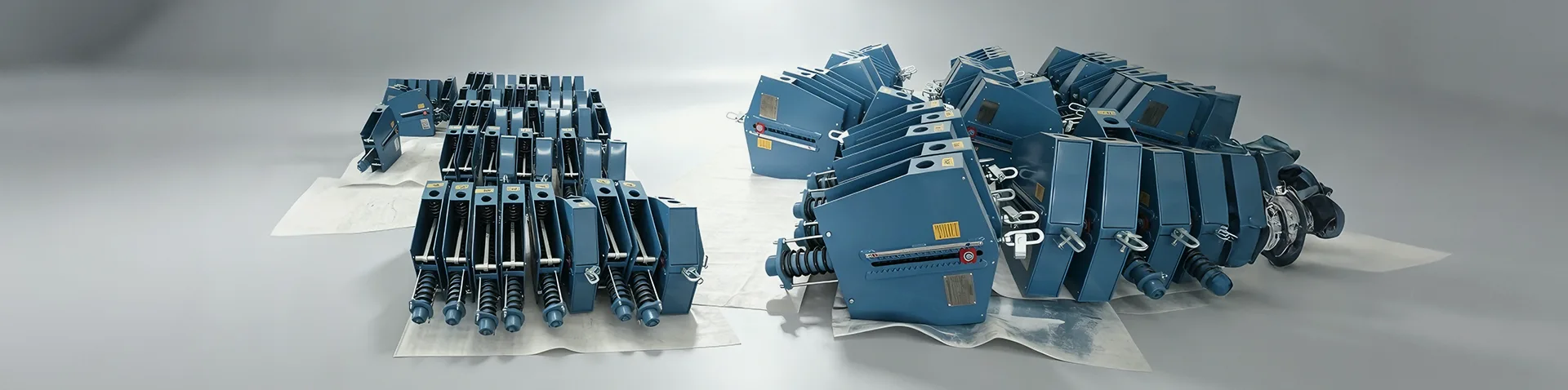
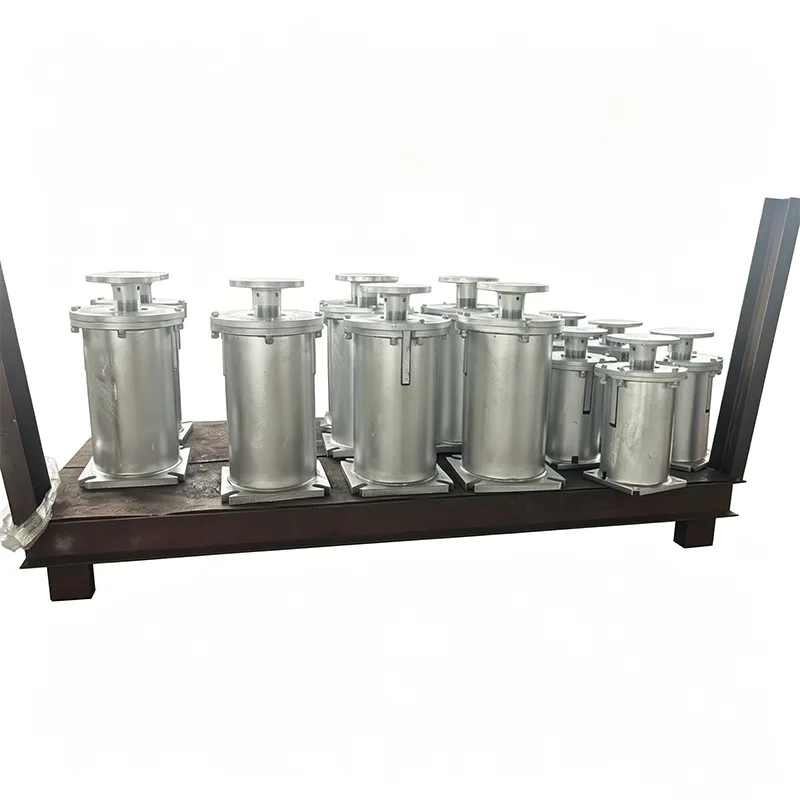
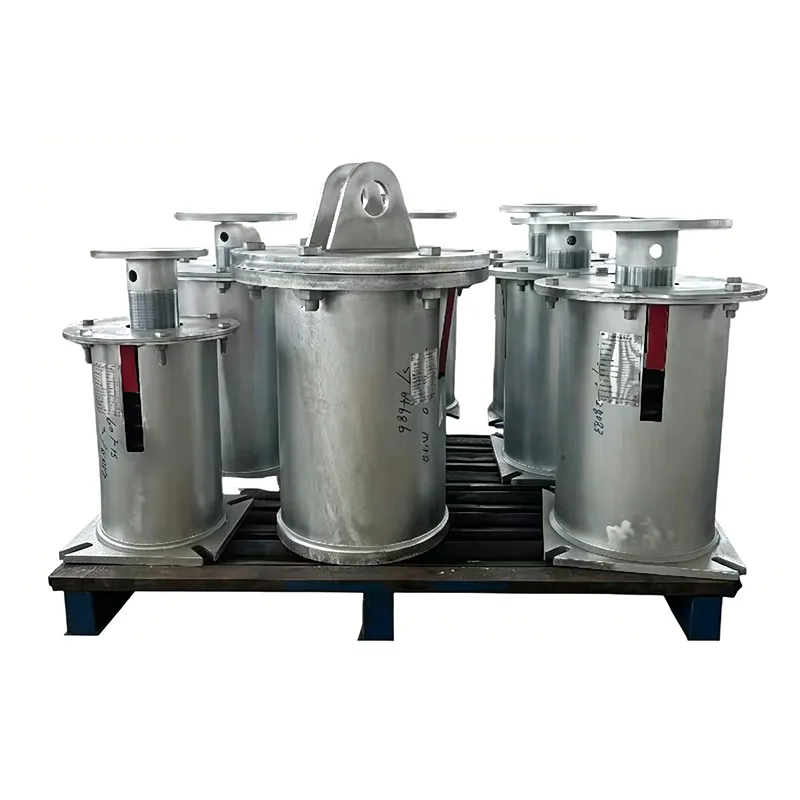
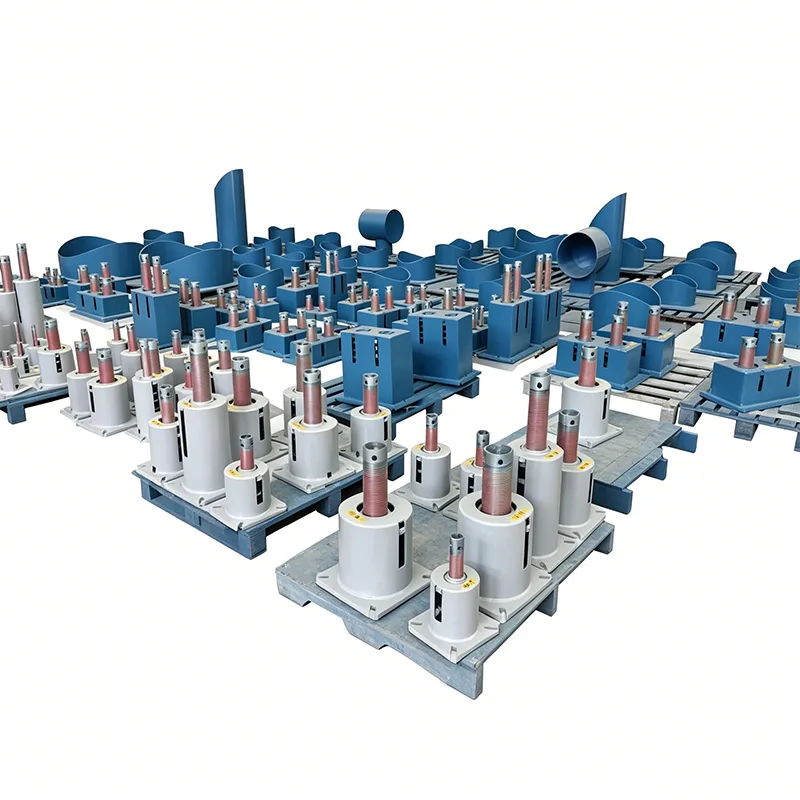
Yangzhou Tianshun supplies buckling restrained braces (BRBs) that act as structural fuses with stable yielding in both tension and compression, offering capacities from 500 to 15,000 kN, LY100/160/225 steel cores, and concrete-filled casing — all cyclic-tested to AISC 341/EN 15129 under ISO 9001 and backed by over 20 years of damping expertise. Request a quote today; wholesale orders welcome, shipping worldwide.

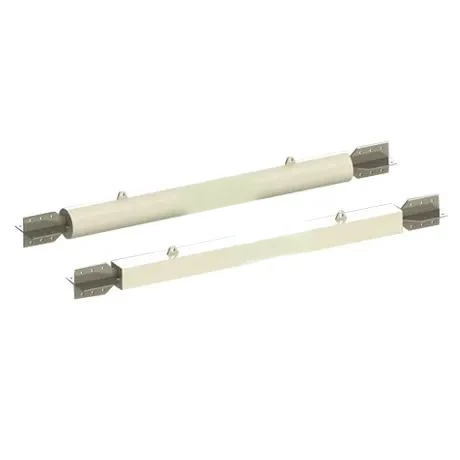
A buckling restrained brace, or BRB, is a structural fuse for buildings. It takes the axial force from an earthquake and dissipates it through stable yielding of a steel core, which is prevented from buckling by an external casing. Because the brace behaves almost identically in tension and compression, engineers can predict how it will perform and where the damage will occur.

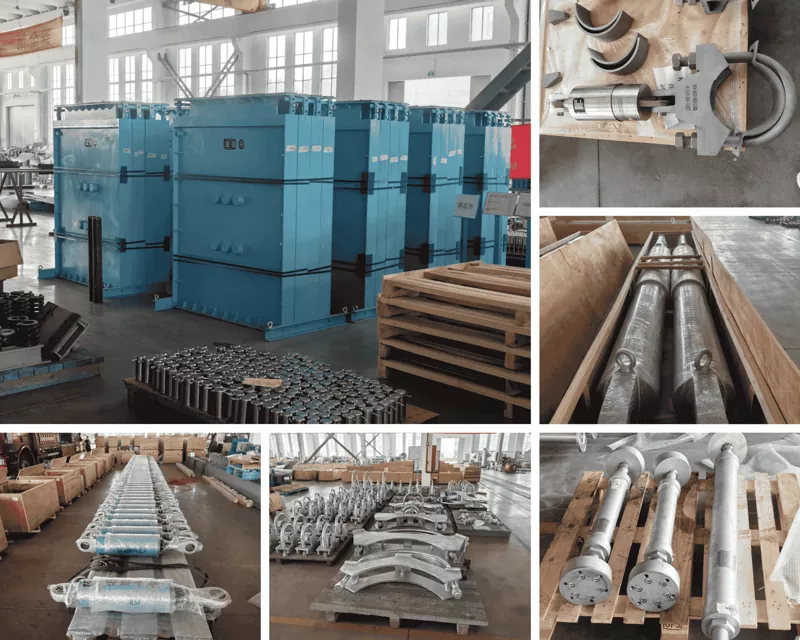
Yangzhou Tianshun produces these braces for new steel frames and seismic retrofits alike. Our involvement in damping technology stretches back more than twenty years, and the braces are fabricated under an ISO 9001:2015 certified system in a dedicated production facility in Jiangsu, China.

Buckling Restrained Brace

How the three components work together

The steel core

All the axial load goes through the core. The middle section is sized to yield during a design-level earthquake, while the end zones have a larger cross-section that stays elastic. This forces the inelastic deformation into a known region, giving the structural engineer a high degree of confidence in the failure mode. The core steel grades are typically LY100, LY160, or LY225, selected to match the required yield capacity.

The debonding layer

Between the steel core and the outer casing sits a material that eliminates bond and friction. This layer ensures the casing carries no axial load and allows the core to expand and contract freely. Without it, the casing would pick up force and compromise the brace’s symmetrical hysteretic behaviour.

The casing

Most commonly a concrete-filled steel tube, the casing provides lateral restraint only. Its flexural stiffness prevents the slender core from buckling under compression, which is what allows the brace to reach full yield in both directions without strength degradation.

Practical advantages over conventional braces

Buckling-restrained braced frames, or BRBFs, carry several practical benefits compared to special concentrically braced frames (SCBFs). Because the BRB can dissipate energy through stable, repeatable cycles, building codes often assign a higher behaviour factor — R=8 in many provisions. The resulting reduction in seismic design loads can translate into smaller columns and beams, lighter connections, and reduced foundation demands.

On site, BRBs are usually faster to erect. Connections tend to be simpler, and the brace arrives as a single assembled unit rather than as multiple pieces to be stitched together in the air.

After a major earthquake, the damage concentrates in the replaceable core. Inspecting and swapping a brace is a defined procedure, far simpler than repairing a buckled conventional brace. This replaceability also makes BRBs attractive for retrofitting older buildings, where the braces can be bolted into existing frames to raise the seismic performance without a complete rebuild.

Independent studies have noted savings of up to $5 per square foot when BRBFs replace other seismic systems, driven by the combined effect of lighter structure, faster erection, and simpler connections.

Technical scope

Parameter Typical range and options
Yield force 500 kN to 15,000 kN (higher capacities can be designed)
Core steel LY100, LY160, LY225, or project-specified grades
Casing Concrete-filled steel tube or all-steel
End connections Bolted, pinned, or welded per frame design
Length Tailored to bay geometry
Applicable standards AISC 341, EN 15129, JGJ 99, and other national codes

Each brace is dimensioned to the project-specific forces and drift limits. Our engineering group works with the structural engineer of record to finalise core area, stiffness, and connection geometry.

Buckling Restrained Brace

Testing and documentation

Before a BRB leaves the factory, it goes through a cyclic acceptance test at progressively increasing displacements. We verify the maximum forces in tension and compression, confirm the hysteresis loops are stable, and check that the cumulative inelastic deformation meets the project requirement. A full test report is part of the documentation package delivered with the brace.

Material traceability covers every steel plate back to its heat number. Casing material records and weld inspection reports are included as standard. When a project calls for prototype qualification testing at an independent laboratory, we manage that process as well.


Where BRBs are installed

High-rise buildings – steel and composite towers in seismic regions where drift control and architectural flexibility both matter.

Airports and transport hubs – long-span structures that need energy dissipation without heavy bracing members cluttering open spaces.

Schools and hospitals – facilities that are expected to function after an earthquake, with brace replacement planned as a straightforward maintenance operation.

Convention centres and exhibition halls – large column-free volumes where braces can be arranged in various configurations to suit the architecture.

Industrial buildings – heavy equipment raises the seismic mass; BRBs provide lateral resistance without consuming excessive floor space.

Retrofit projects – existing concrete or steel frames can be upgraded by adding externally mounted BRBs while the building remains partly operational.

Frequently asked questions

How is a BRB different from a standard steel brace?

A standard brace buckles in compression and loses strength, producing an asymmetrical response. A BRB yields in both directions without buckling, so the energy dissipation per cycle is stable and predictable.

Can BRBs be used in concrete structures?

Yes. They are most common in steel frames but can be connected to concrete buildings for either new hybrid construction or seismic retrofits. The end details are engineered case by case.

What happens to the brace after a strong earthquake?

The core may show permanent elongation and the casing remains intact. The damaged brace is unbolted and replaced. The procedure is typically outlined in the project’s post-earthquake inspection and response plan.

Do you supply only the brace or also the connections?

We supply the complete brace assembly — core, casing, end zones, and connection plates. The interface with the frame is coordinated with the project structural engineer.

What documentation comes with each order?

Mill certificates, casing material records, coating or fireproofing certificates where required, weld reports, and the factory acceptance test report for each brace. For AISC 341 or EN 15129 projects, we provide the full compliance package.

What lead times should we expect?

Lead times depend on the quantity and the complexity of the end connections. As a guide, standard production runs between eight and twelve weeks from drawing approval. We keep you informed of progress at every key milestone.

Working with Tianshun

Send us the design forces, story drift limits, and preferred connection type. An engineer, not just a sales coordinator, will review the input and reply with a preliminary brace configuration and test plan within one working day.

Custom core materials, special fireproofing, and project-specific qualification programs are part of our everyday supply, not exceptions. After delivery, we stay available for installation support and post-earthquake inspection guidance.

Buckling restrained braces that protect the structure by yielding in a controlled way, and are easy to inspect and replace when the shaking stops.


Hot Tags: Buckling Restrained Brace, Manufacturer, Supplier, Factory
Send Inquiry
Contact Info

If you have any enquiry about quotation or cooperation, please feel free to email us at jsts2021@yeah.net or use the following inquiry form.Our sales representative will contact you within 24 hours. Thank you for your interest in our products.

X
We use cookies to offer you a better browsing experience, analyze site traffic and personalize content. By using this site, you agree to our use of cookies.Privacy Policy
RejectAccept