No.115 Yunhe North Road, Yangzhou City, Jiangsu Province, China +86-13032562550 jsts2021@yeah.net
Follow Us -
Products
Fabric Expansion Joint
  • Fabric Expansion JointFabric Expansion Joint

Fabric Expansion Joint

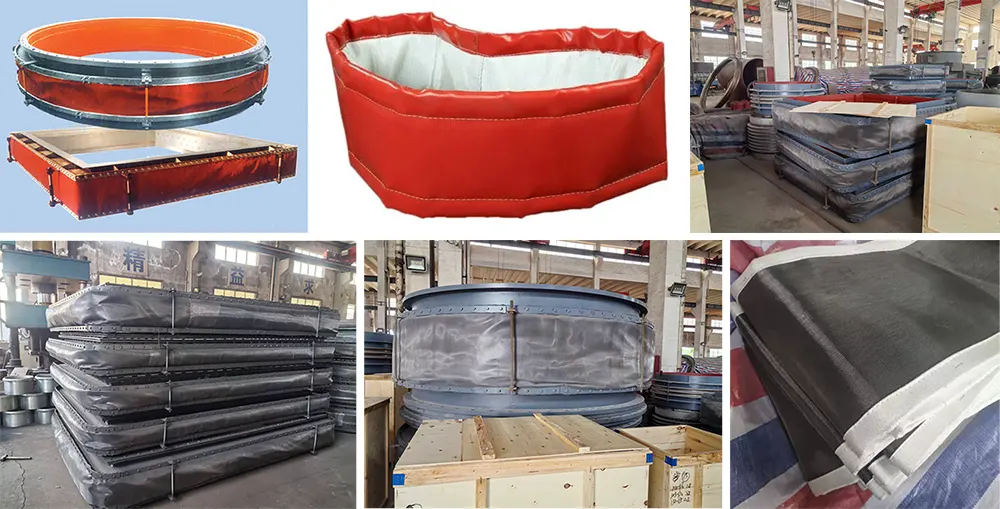
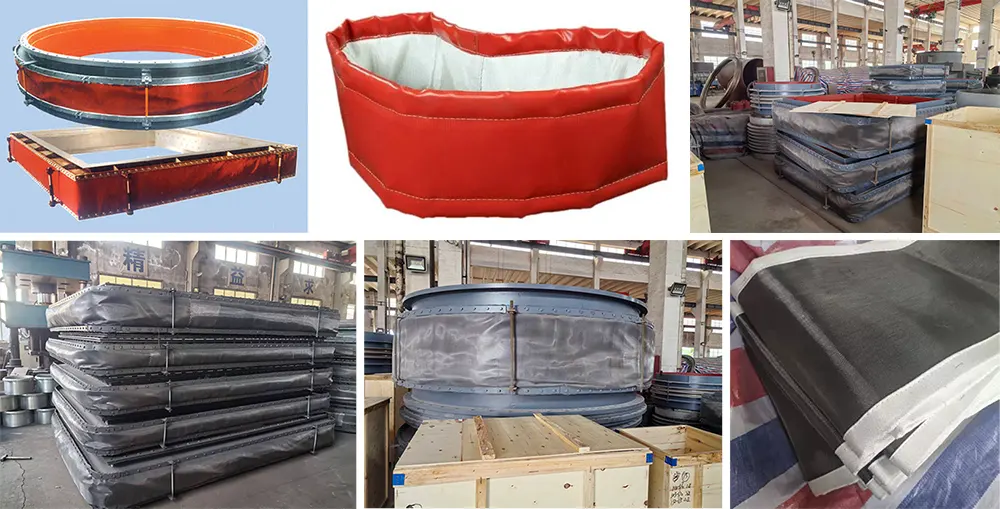
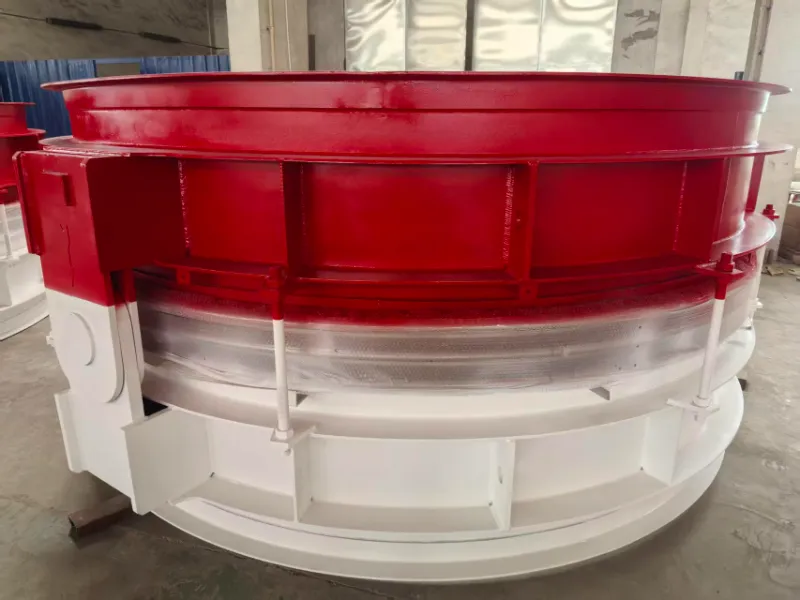
Fabric expansion joint is a kind of non-metallic expansion joint. It adopts multi-layer composite fabric membrane, which can absorb axial, lateral and angular displacement with no internal pressure thrust. It has good vibration and noise reduction performance, widely used in boiler flue, hot air and dust removal ducts. Custom shapes and high temperature resistant materials are available.

    Fabric expansion joints, also known as fiber fabric compensators, are a type of non-metallic expansion joint. They consist of multiple layers of composite non-metallic facing, an insulation layer, clamping plates, and a frame. By relying on the deformation of the flexible facing, they absorb combined axial, lateral, and angular displacements caused by the thermal expansion and contraction of pipelines. They generate no internal thrust, reduce vibration and noise, and can compensate for installation deviations and foundation settlement. They are commonly used in large-cross-section, low-pressure flue and duct systems.

    Fabric Expansion Joint

    Product Structure

    Composite Skin: The main flexible layer, consisting of multiple layers of silicone fabric, fluorocarbon fabric, fiberglass fabric, and other materials.

    Insulation Layer (Optional): Provides thermal insulation to reduce the outer wall temperature.

    Metal Clamping Plates: Securely clamp and fix the skin in place to prevent leaks.

    Metal Frame: Flange or pipe-connection frame for connecting to pipelines.

    Limit Rods (Optional): Limit maximum deformation and prevent excessive stretching of the skin.

    Product Classification

    1. Silicone-coated fiberglass fabric (silicone cloth) Temperature range: -40°C to 600°C; suitable for flue gas ducts without strong corrosive gases, hot air ducts, and dust removal ducts; offers high cost-effectiveness

    2. Fluorocarbon rubber-glass fiber fabric (fluorocarbon fabric): Temperature resistance: -40°C to 800°C; resistant to acids and alkalis, as well as corrosion from flue gas condensation; the preferred choice for desulfurization and denitrification flue ducts

    3. Ceramic fiber composite fabric: Temperature resistance up to 1000°C; suitable for high-temperature kilns, waste incineration, and gas turbine exhaust systems

    4. Antistatic Fabric: For explosion-proof applications; used in ducts containing flammable and explosive dust or combustible gases to prevent electrostatic sparks

    5. Wear-Resistant Reinforced Fabric: For flue ducts subject to erosion by large amounts of fly ash and particulates (cement plants, boilers); provides an additional wear-resistant protective layer


    Product Advantages

    1. No internal pressure thrust; simplifies duct support design and significantly reduces support costs

    2. Can simultaneously absorb multi-directional combined displacement (axial, lateral, and angular), providing high compensation capacity

    3. Lightweight, with vibration damping and noise reduction capabilities; absorbs vibration transmission from fans and boilers

    4. High-temperature resistant, suitable for high-temperature flue gas; fatigue-resistant and crack-resistant

    5. Customizable in rectangular, circular, and irregular shapes (e.g., round top and square bottom); easy to install

    Applicable Operating Conditions

    Boiler flue ducts, hot air ducts, dust collection ducts, power plants, metallurgy, cement, waste incineration, fan inlets and outlets, desulfurization and denitrification ducts.

    Suitable for: Large-cross-section, low-pressure / slight negative-pressure high-temperature flue gas ducts requiring multi-directional compensation, vibration damping, and noise reduction

    Not suitable for: High-pressure process pipelines, conditions with intense particulate and high-speed erosion (requires thickened wear-resistant skin)

    Technical Specifications

    Materials: Silicone-glass fiber composite fabric, fluorocarbon rubber-glass fiber fabric, ceramic fiber fabric, etc. Cross-section: Circular, rectangular, and custom shapes (such as round-top/square-bottom) available upon request. Pressure rating: Slight negative pressure to PN0.1 (primarily low pressure) Temperature Range: -40°C to 1000°C (selected based on facing material) Connection Methods: Flange-clamp connection / welded frame Compensation Capability: Axial displacement, lateral displacement, angular displacement

    Selection & Installation Guidelines

    1. For selection, provide cross-sectional dimensions, pressure, temperature, medium, compensation requirement, and whether dust is present

    2. For flue gas containing dust, it is recommended to use a wear-resistant lining and install an internal guide sleeve if necessary

    3. The limit rod serves only as a protective stop and cannot withstand the thrust from internal pipe pressure

    4. During installation, do not force the joints together or distort the lining to prevent tearing and leakage

    5. Avoid scratching the lining with sharp objects; provide adequate external protection, and do not subject it to external impact

    Factory Scale and Production Capacity

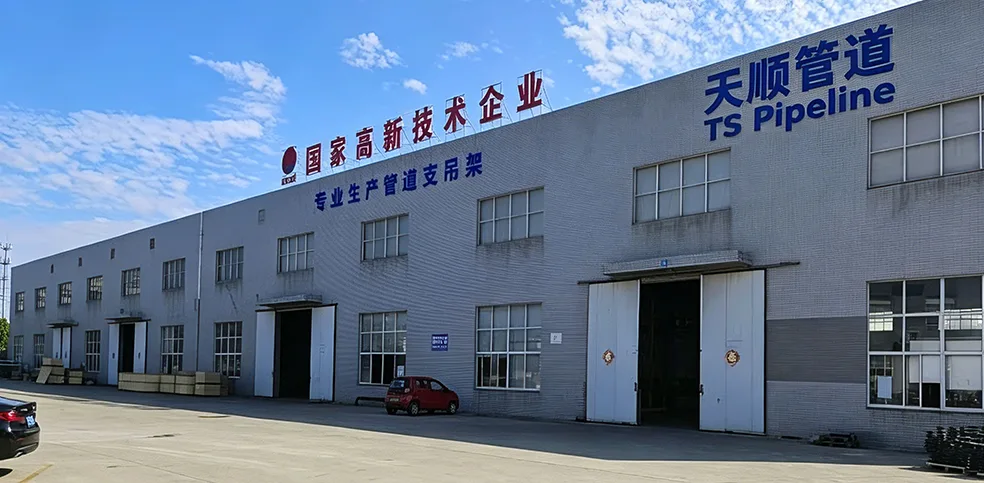
    Yangzhou Tianshun Pipeline Technology Co., Ltd.
    Send Inquiry
    Contact Info

    If you have any enquiry about quotation or cooperation, please feel free to email us at jsts2021@yeah.net or use the following inquiry form.Our sales representative will contact you within 24 hours. Thank you for your interest in our products.

    X
    We use cookies to offer you a better browsing experience, analyze site traffic and personalize content. By using this site, you agree to our use of cookies. Privacy Policy
    RejectAccept